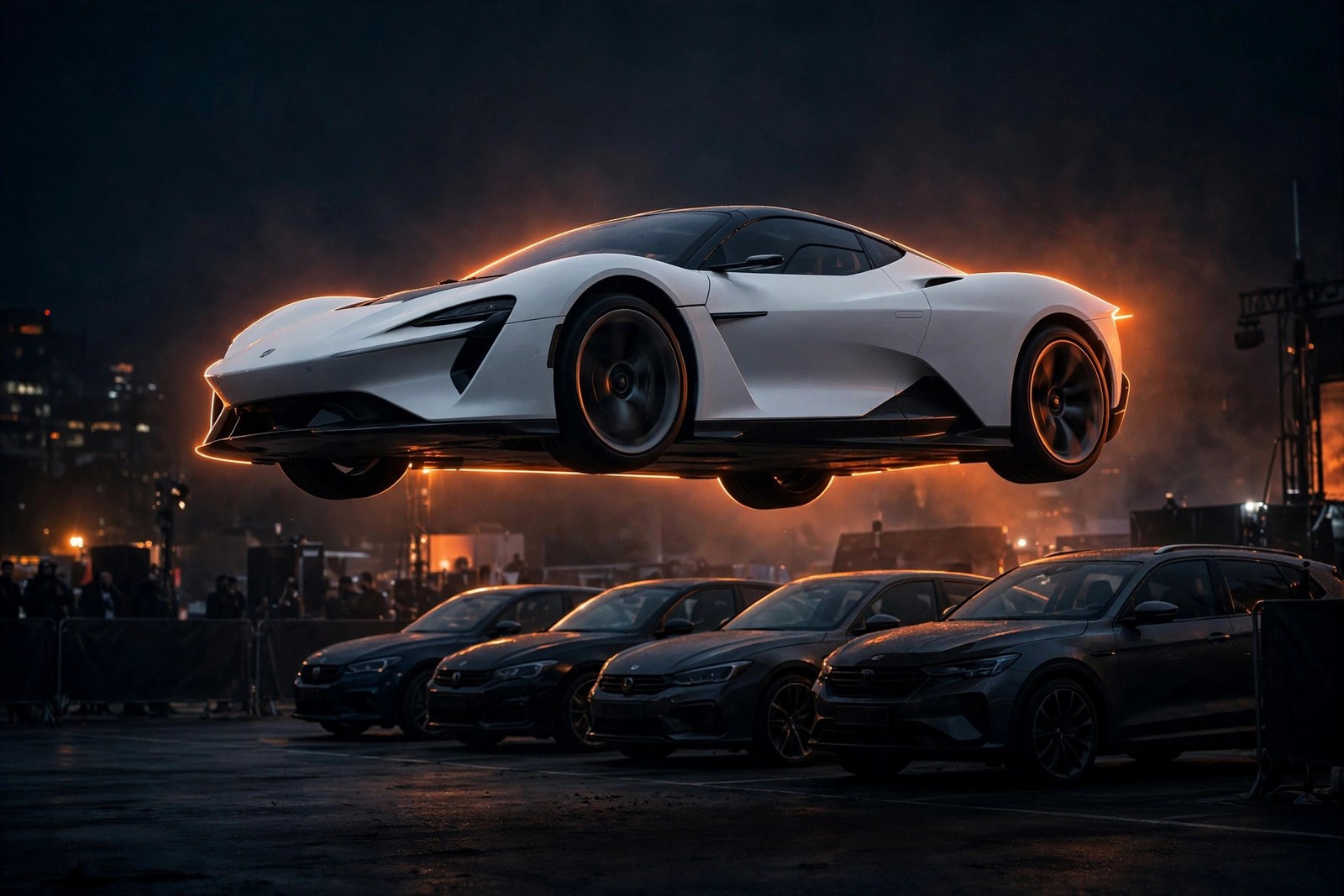
Nine years late, and then it drove up a wall
Nine years. That's how long Tesla fans have waited since the second-generation Roadster broke cover in 2017 with a promised 2020 delivery date that came and went like a servo pie warmer. On Thursday night in Texas, Tesla finally showed the finished car — and to be fair, it was worth the wait for the theatre alone. A white prototype drove up a multi-storey ramp, stopped upside down, flipped off the top and landed on its thrusters, then jumped clean over a row of Teslas including a Semi. Then it ran 0-60 mph while a timer read 0.81 seconds. Elon Musk told the crowd: "Flying cars are real."
Source: The RED Review
Watch it fly
Video: Tesla Roadster reveal event footage, via YouTube
Three versions, from quick to absurd
Tesla is offering the Roadster in three trims. The Performance is the road-going one, claiming 0-60 mph in under 1.6 seconds. The Thrust adds rear-mounted thrusters for a claimed sub-0.9-second sprint. And the Rocket is a single-seat, invite-only monster with the full thruster system, a claimed sub-0.59-second 0-60 — and Tesla's own words: "not approved for public road use." Reservations are open for the first two: US$50,000 to hold a Performance, US$250,000 for a Thrust. Note those are reservation payments, not the car's price — Tesla hasn't announced what the thing will actually cost.
Source: Primetimer
How does a car "fly"?
It's not wings — it's plumbing. The car carries 10 cold-gas thruster nozzles fed by carbon-fibre pressure vessels holding 600 litres of compressed air, which Tesla says generate four to five times the force the tyres can. A fan-based suction system underneath holds the car to the inverted ramp; the thrusters do the rest — the jumps, the mid-air rotation, the landing. No special propellant, just air. Clever? Absolutely. A flying car you can commute in? Not even close — each "flight" was a carefully staged hop lasting moments.
Source: The RED Review
The fine print (there's always fine print)
Let's keep it honest. That 0.81-second run? Not independently timed, and nobody's confirmed which trim did it or how the timing worked. The Rocket can't be driven on public roads. Production is slated for 2028 — from the company that promised this car for 2020. The 2017 concept promised 1,000 km of range and four seats; the new car claims just over 480 km and seats two (one, in the Rocket). And Musk himself said on stage: "This is not necessarily a safety-optimized car." Still — a car drove upside down on a ramp this week. Give them that one.
Source: Primetimer
That's the full story. More car news every morning — catch every Daily Drop, or browse the car gadgets while you're at it.